Travel Report, August 2026:
We meet our clients at OR Tambo Airport and continue our journey together to Pemba, Mozambique. After an overnight stay, we fly the next morning with a charter flight to the Niassa hunting area. We will be hunting in Block R8 for leopard, lion, crocodile, Cape buffalo, and plains game. We have our own rifles with us: Winchester .375 H & H and Heim .548 as backup.
The trip is well prepared, with visas and invitation letters in hand, and so we arrive without any problems in Lipilichi, where we set up at the Main Camp.
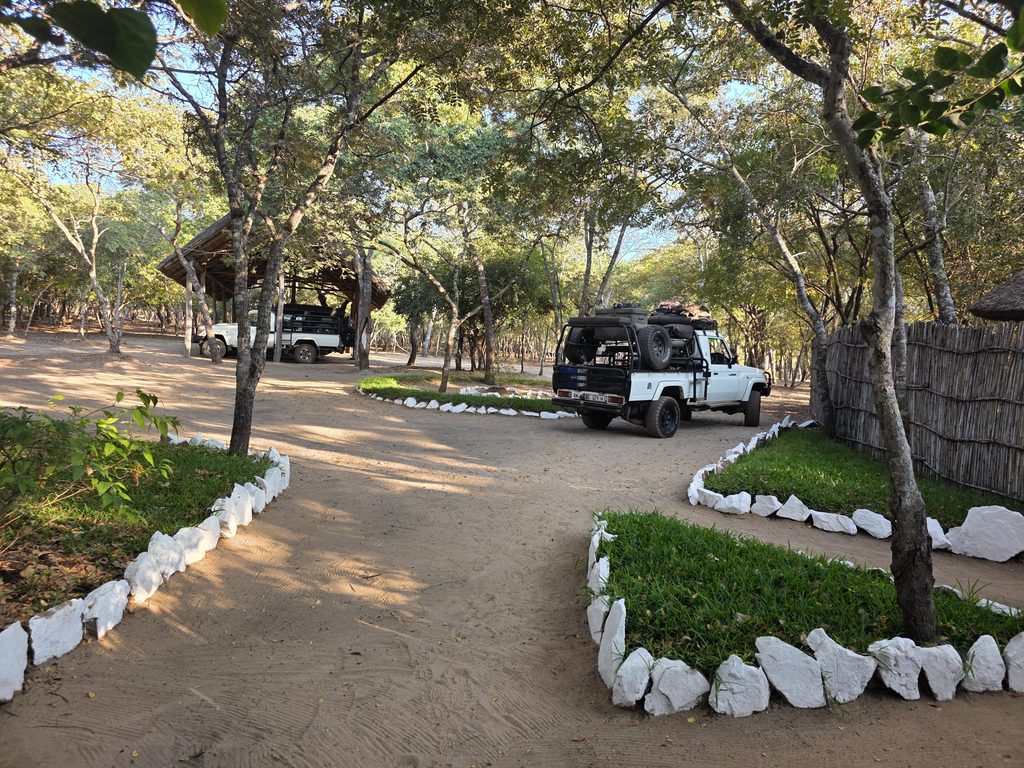
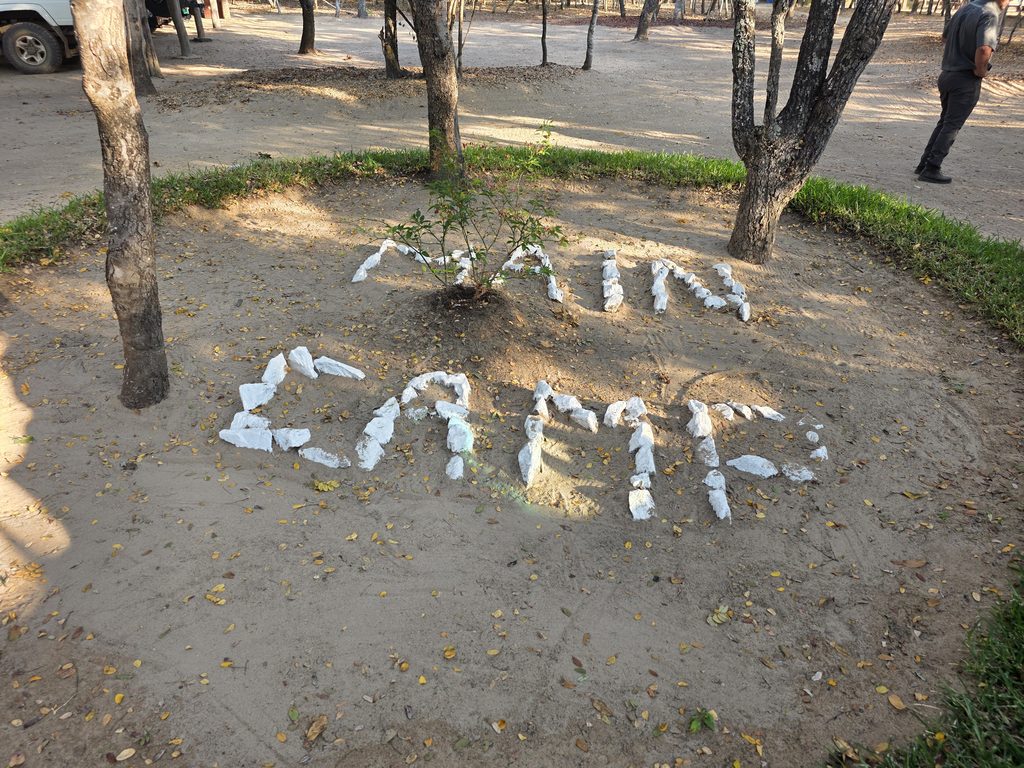
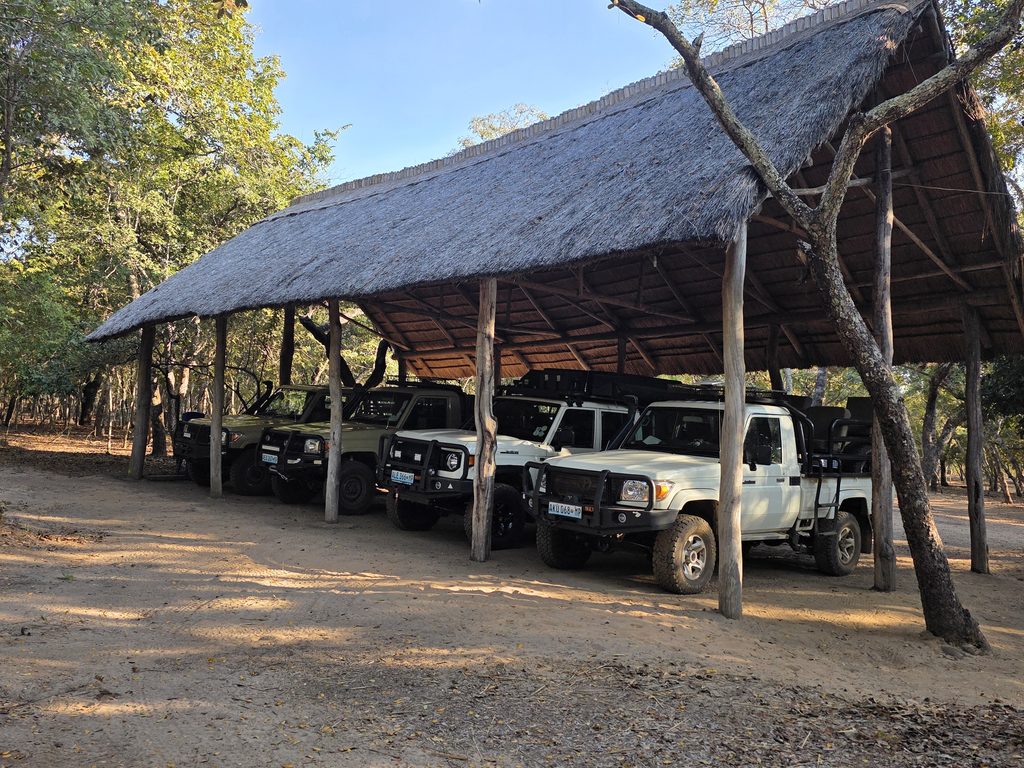
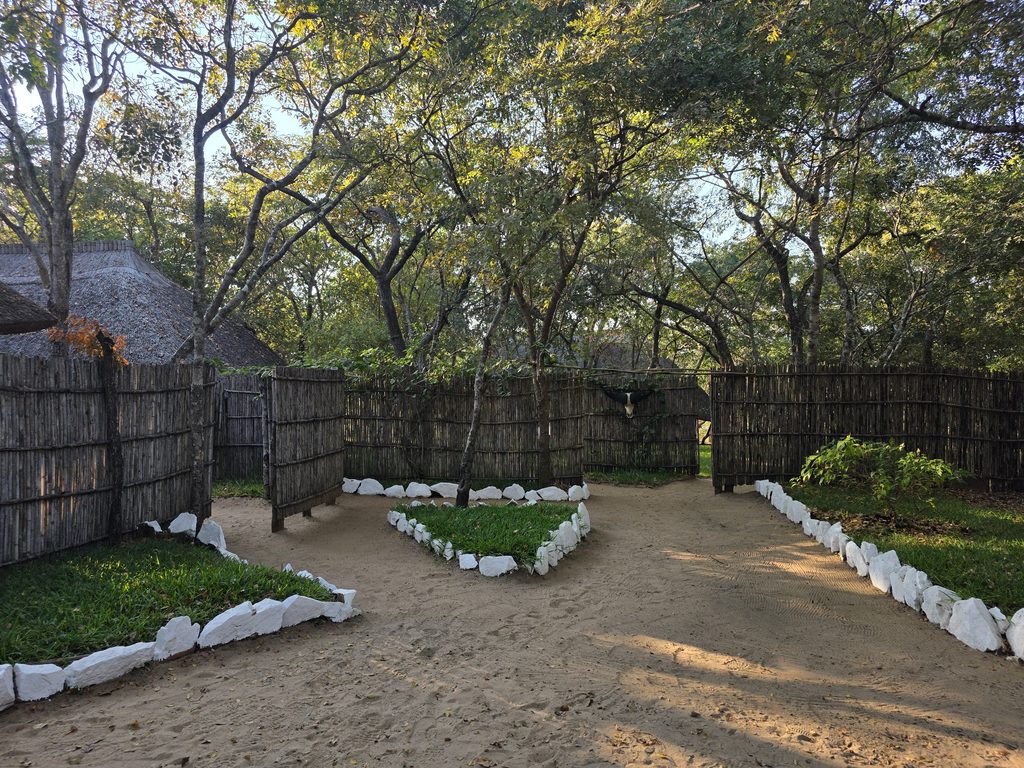
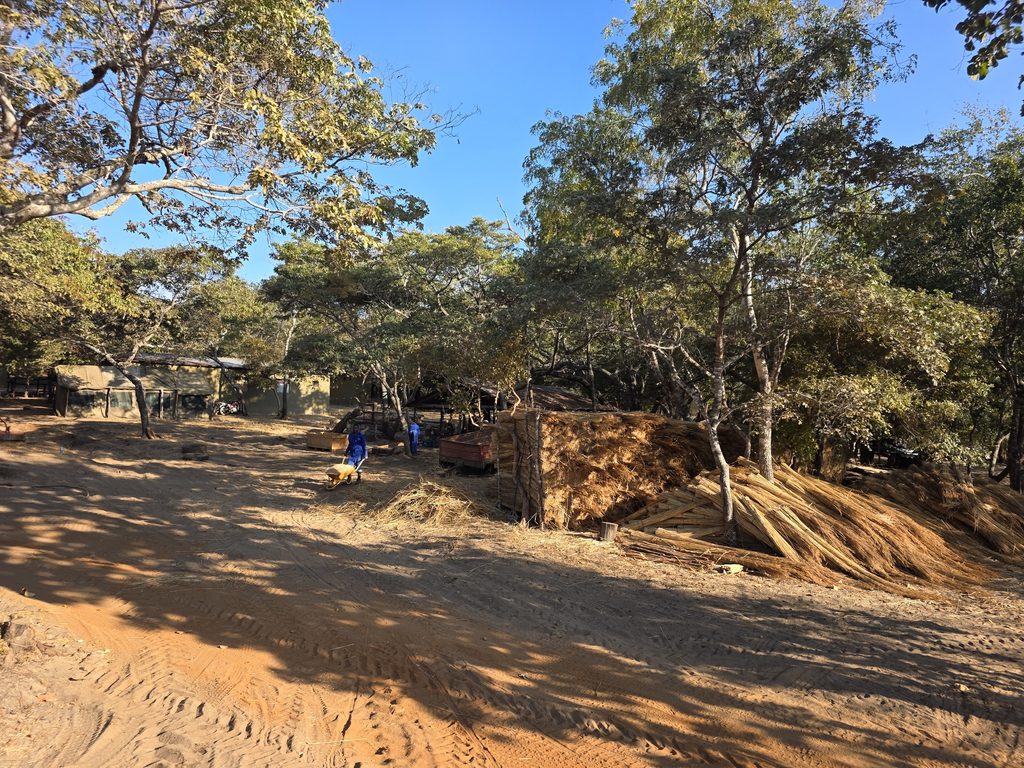
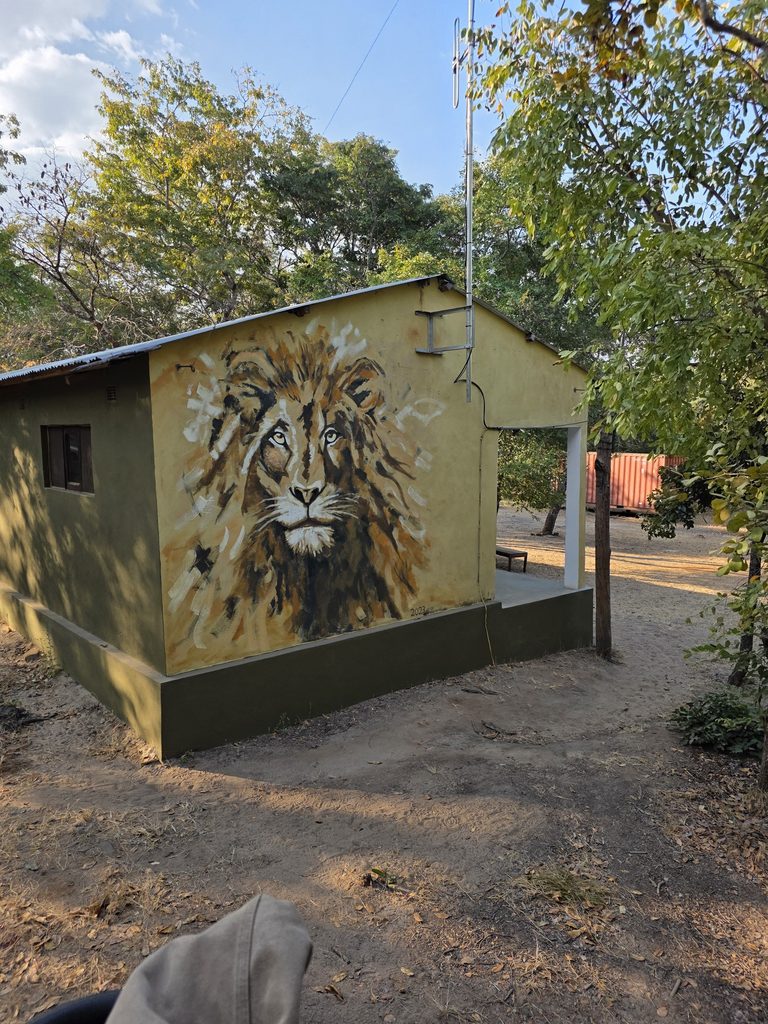
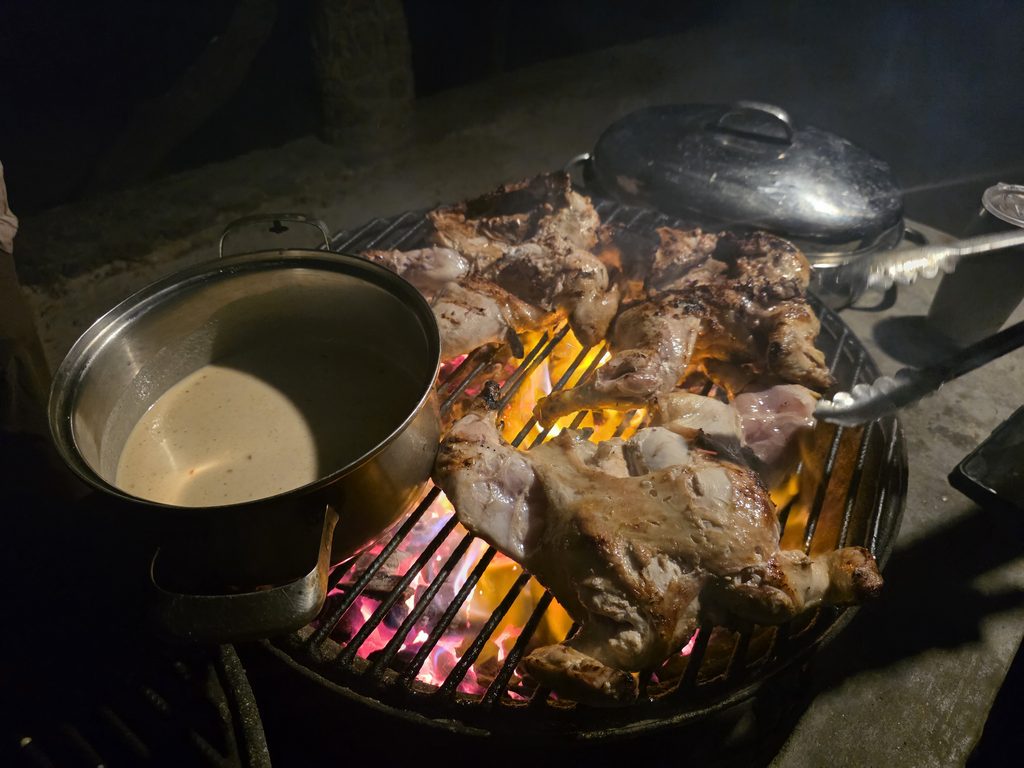
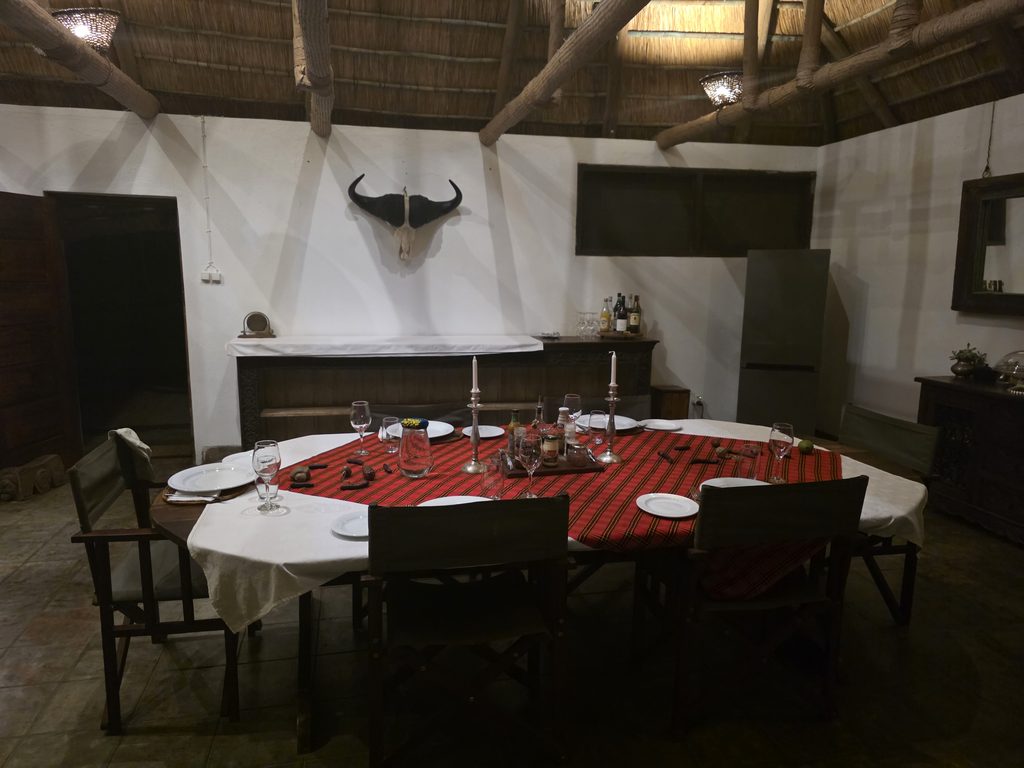
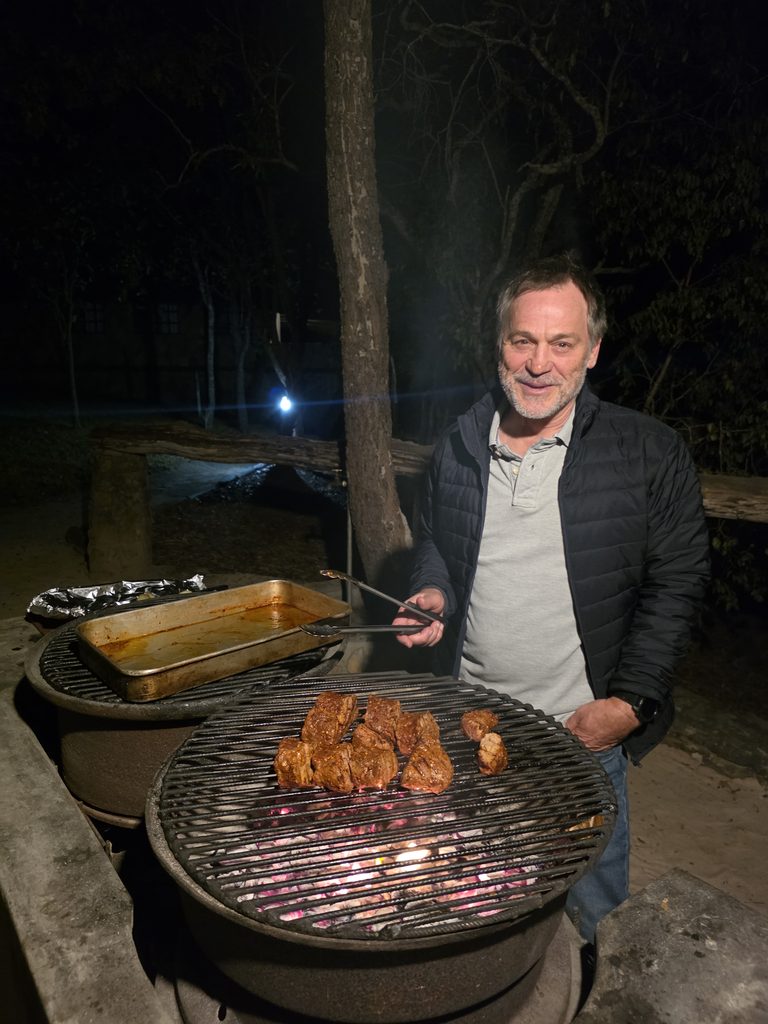
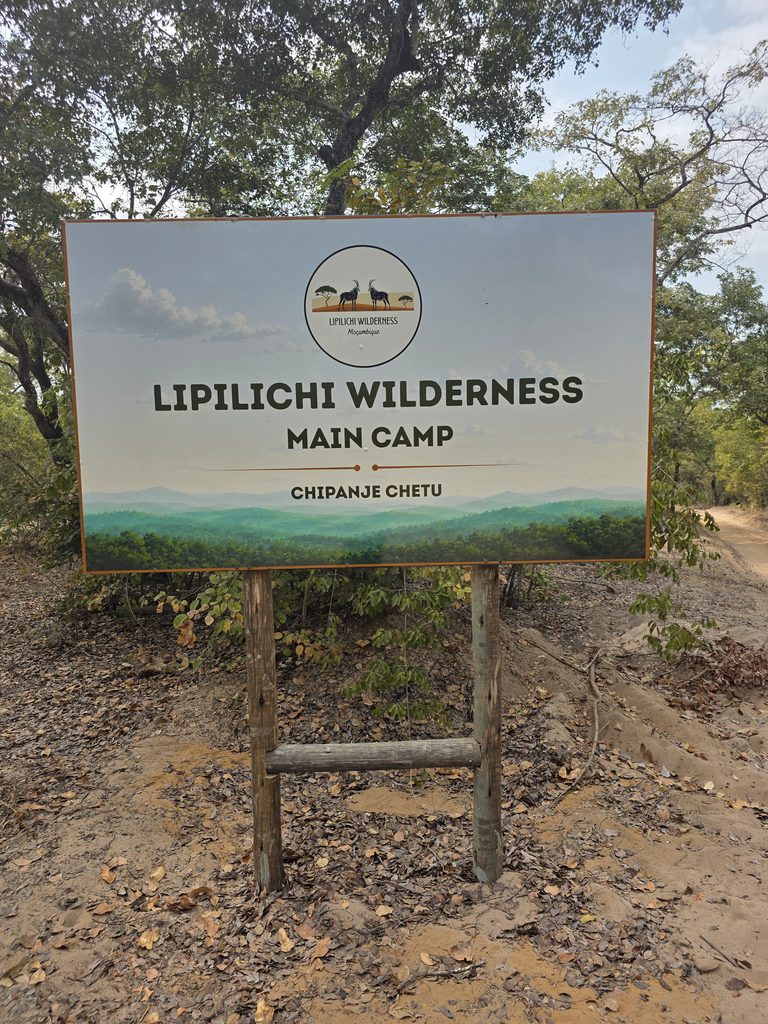
Main Camp, Lipilichi, Chipanje Chetu, Niassa
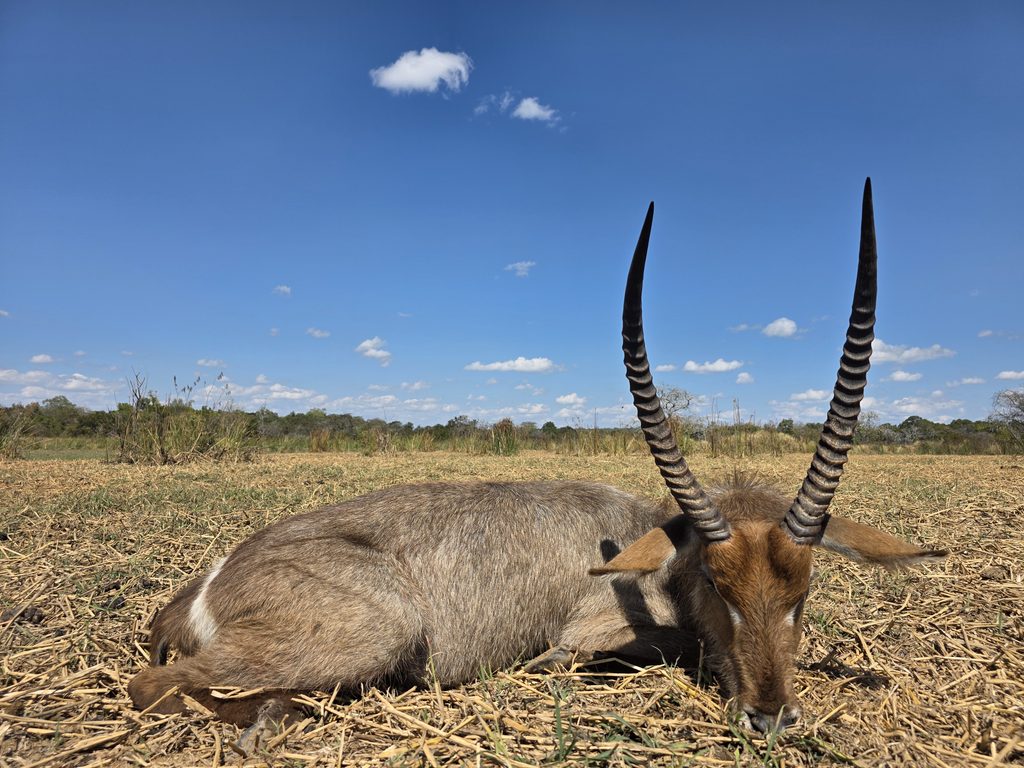
The team there has done good preliminary work – the pre-baiting for leopard and lion is underway, and we inspect the baits after our arrival and check the camera photos. One of the baits is delivering promising photos of a strong male leopard, so we set out to hunt plains game for replenishing the bait. We successfully stalk a waterbuck, restock the bait, and set up a hide in short distance to the bait.
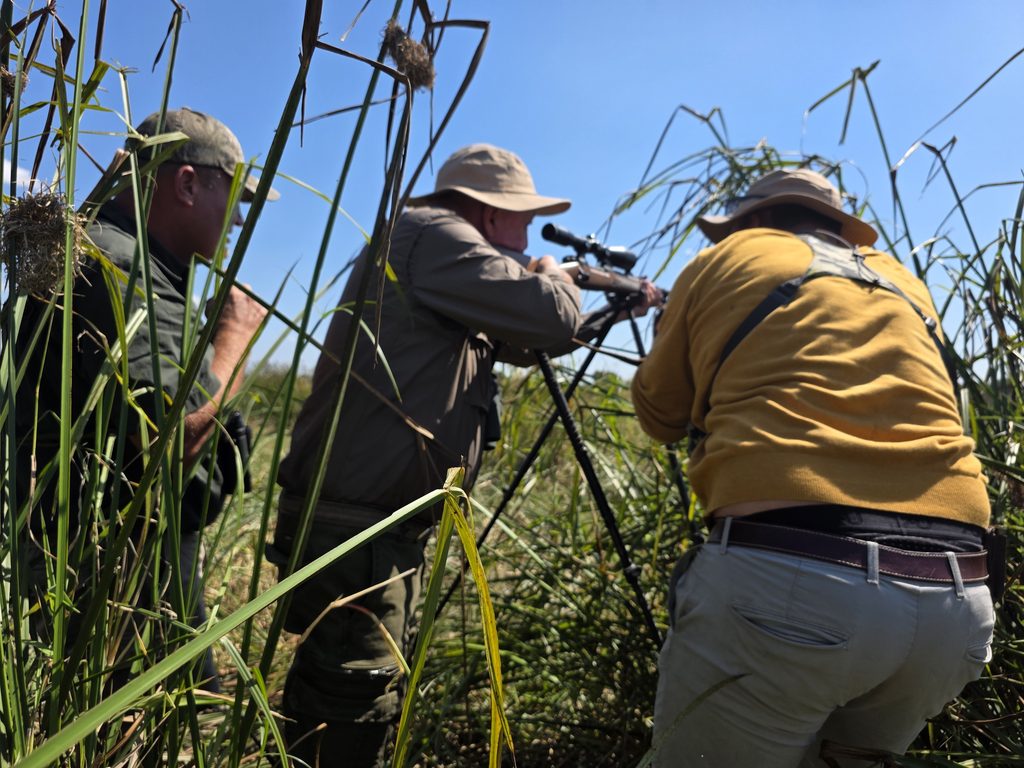
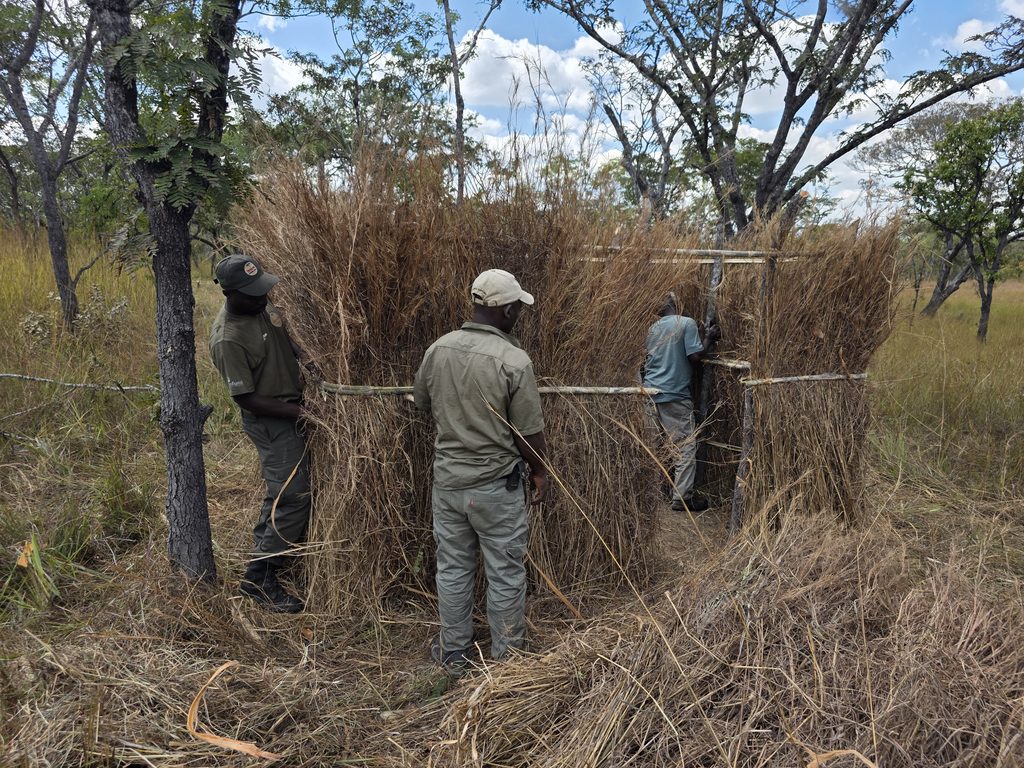
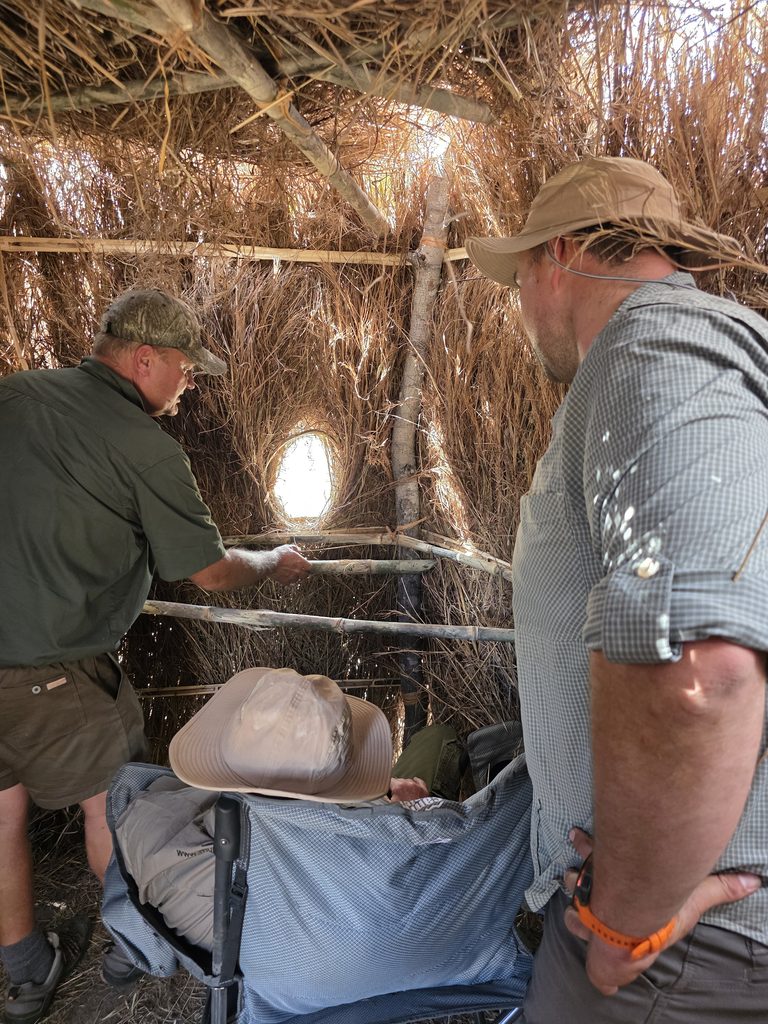
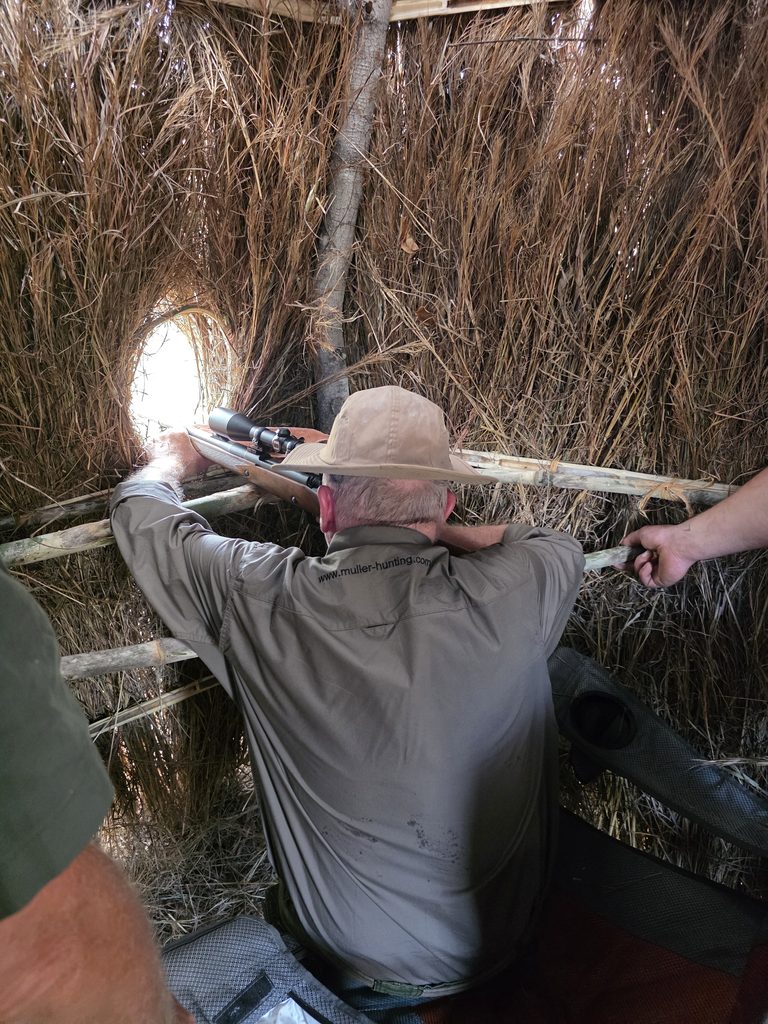
Hide of our Leopard hunt
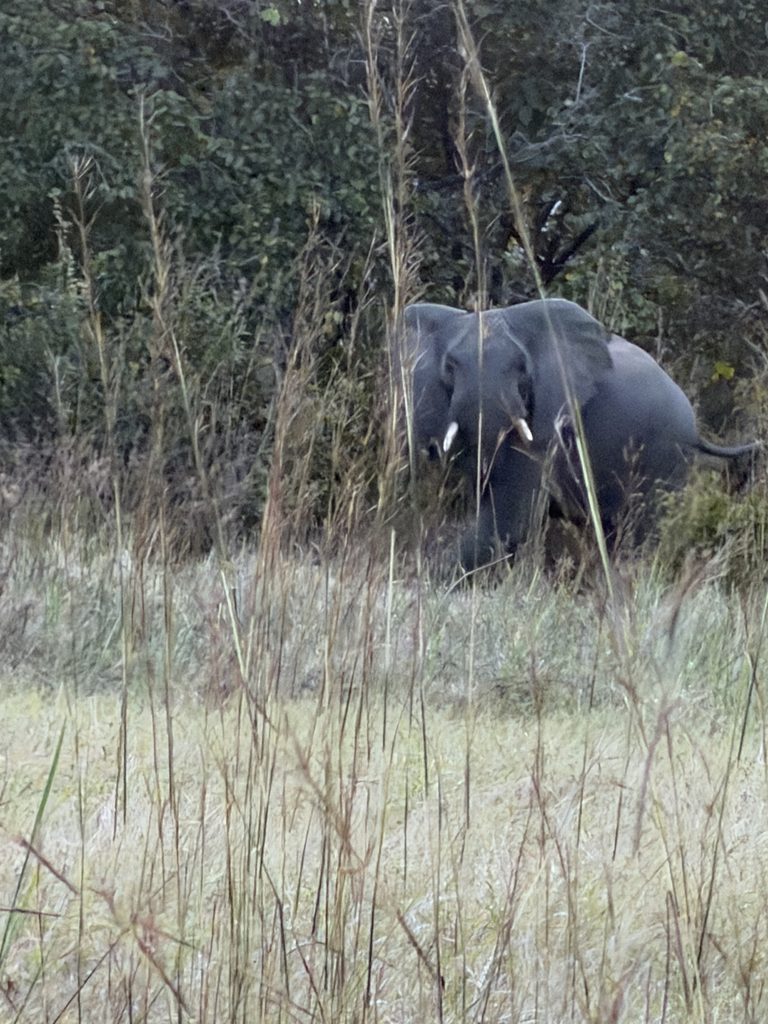
After our hide is built, we recharge at a rest spot a bit away before moving into our hide and waiting for darkness to fall. Even before the darkness sets in, we hear a group of elephants approaching us. With a clearly audible hiss and growl, the leopard makes itself known and drives the elephants away from the bait. Now we know, it’s already nearby. It shouldn’t be long before it jumps elegantly onto the branch of the tree where our bait is hanging. It’s still bright enough that we can aim well at the male and take our shot. The bullet flies, and the leopard falls, fatally hit. We wait a few more minutes and then head to the bait site – a magnificent specimen lies before us, What an amazing hunting experience! This is something we’ll all remember for a long time! Waidmannsheil!
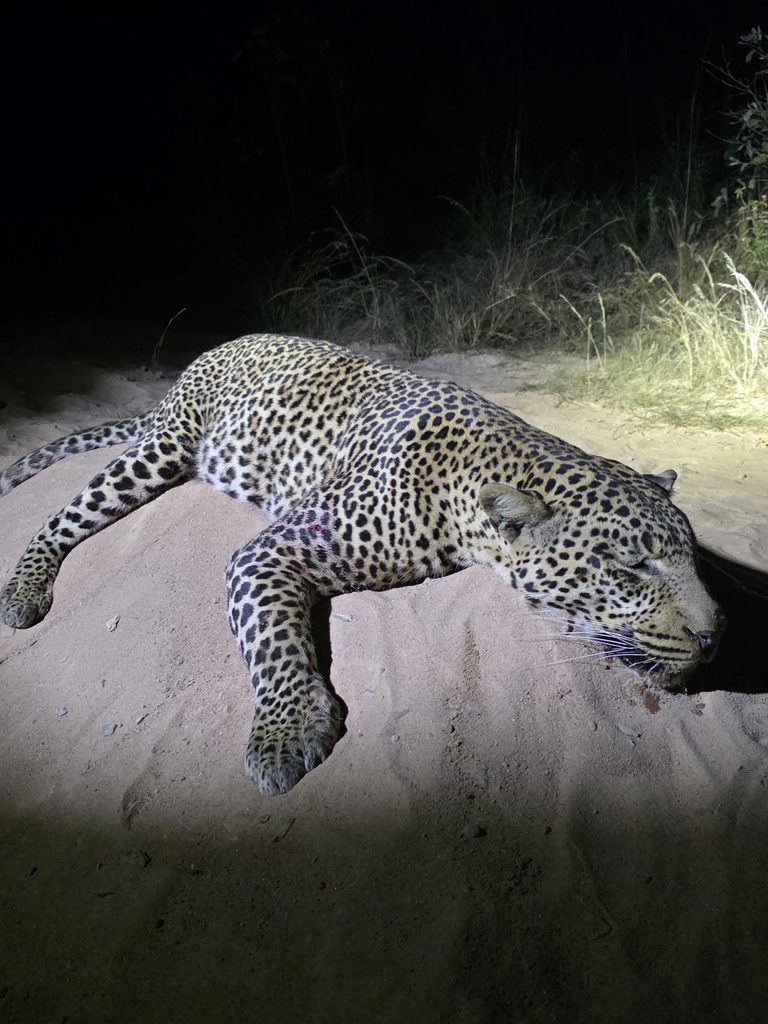
Male Leopard
In the following days, we focus on controlling the hounds for the lion hunt while successfully hunting plains game and Cape buffalo in the meantime: Lichtensteins Hartebeest, Roosevelt Sable, Crocodile and Cape Buffalo.
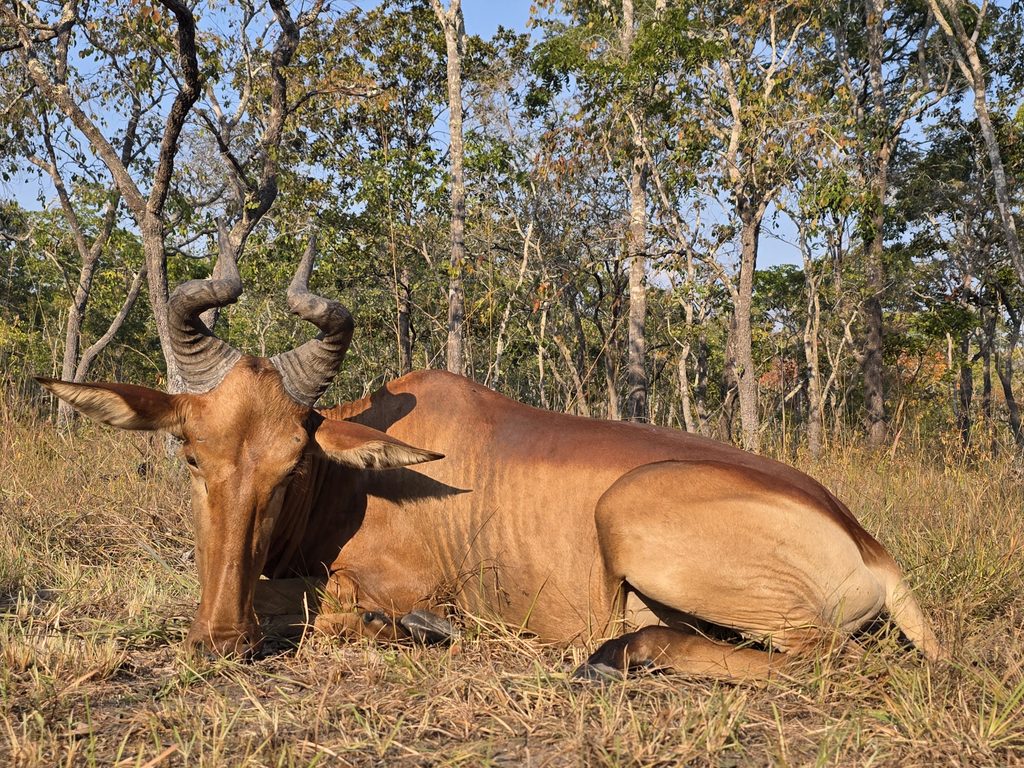
Lichtensteins Hartebeest
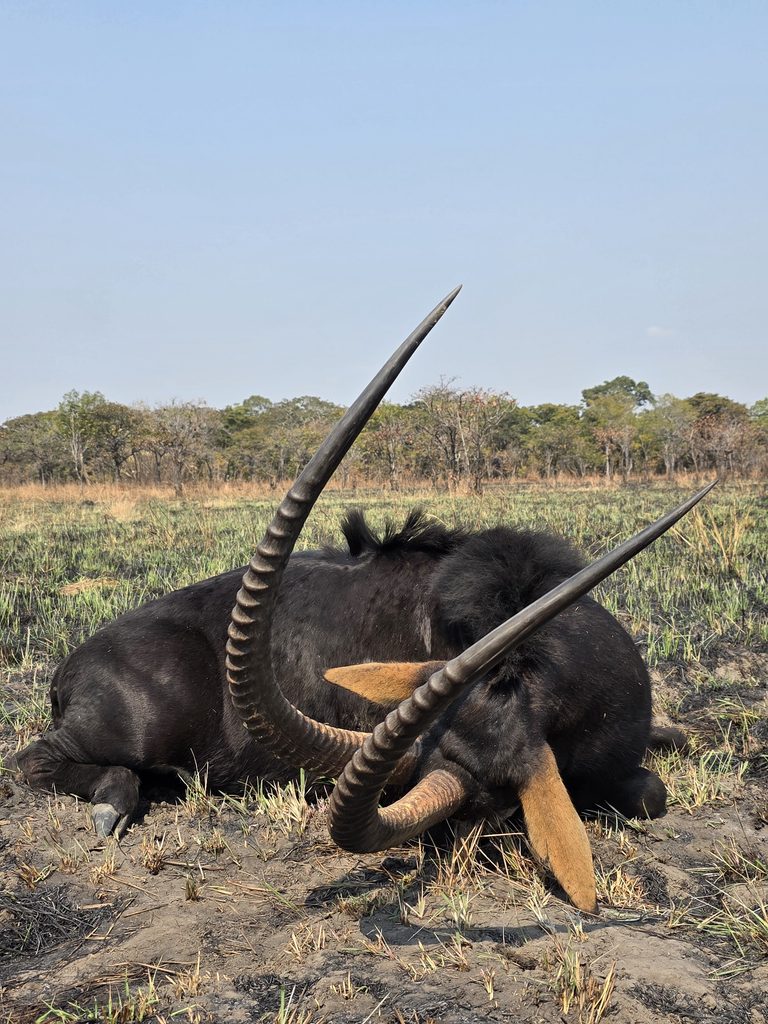
Roosevelt Sable
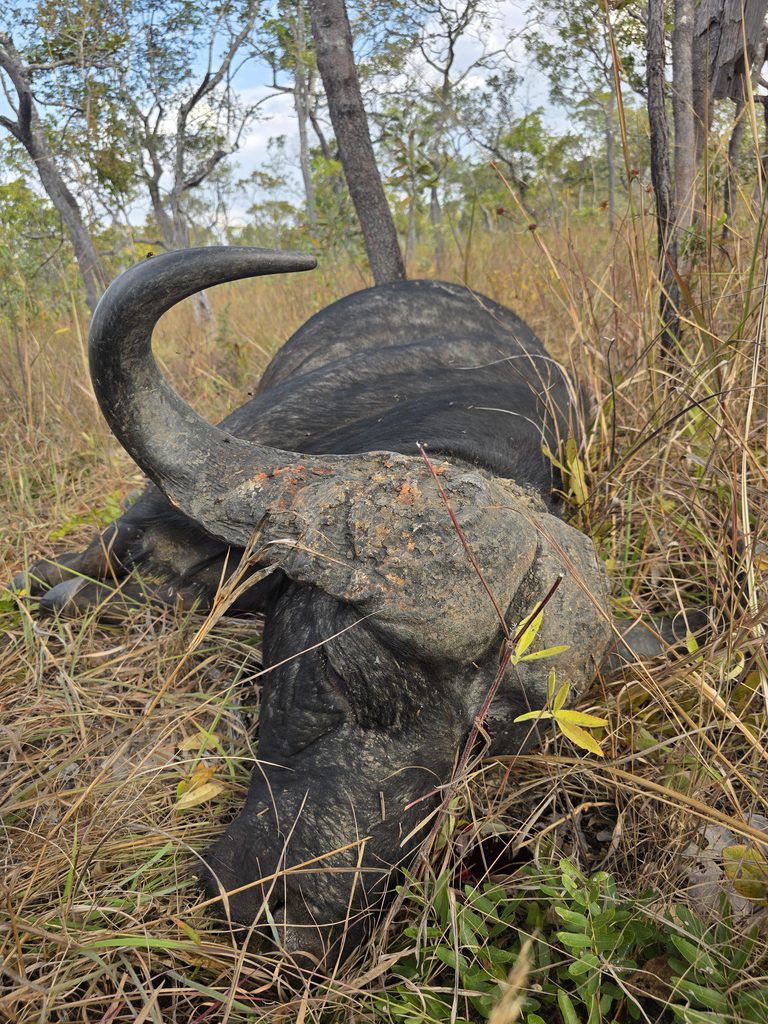
Kaffern-Büffel
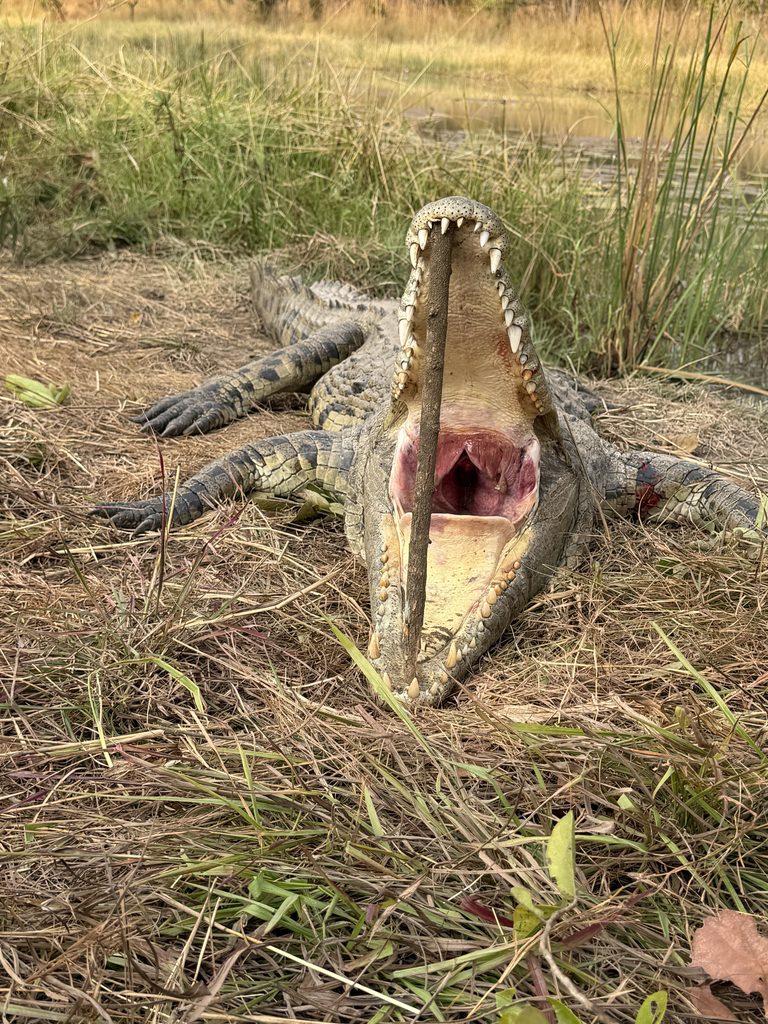
Krokodil
Until the last day of our 21-day safari, we try for the lions. Three times we set out to call at assumed bait sites at night – unfortunately, the male lions are always too young. So, sadly, that one hunt remains unfulfilled. We end the safari with an overnight stay together in Johannesburg and a visit to the Apartheid Museum before the next day takes us back to South Africa – and our guests back to Europe.
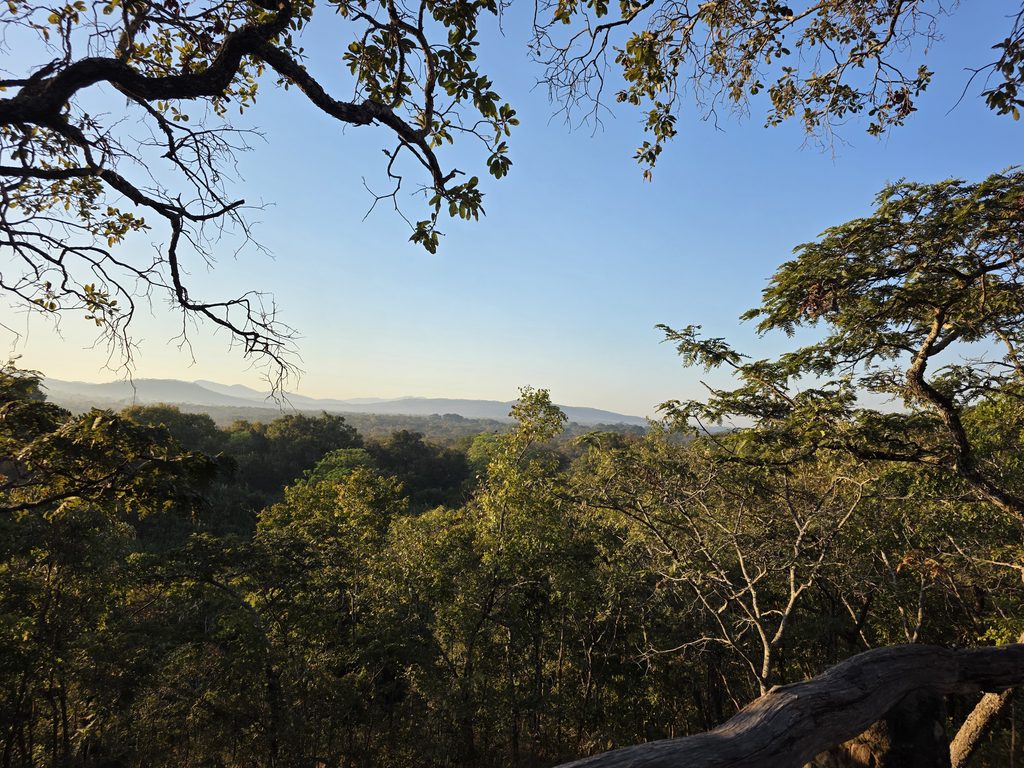
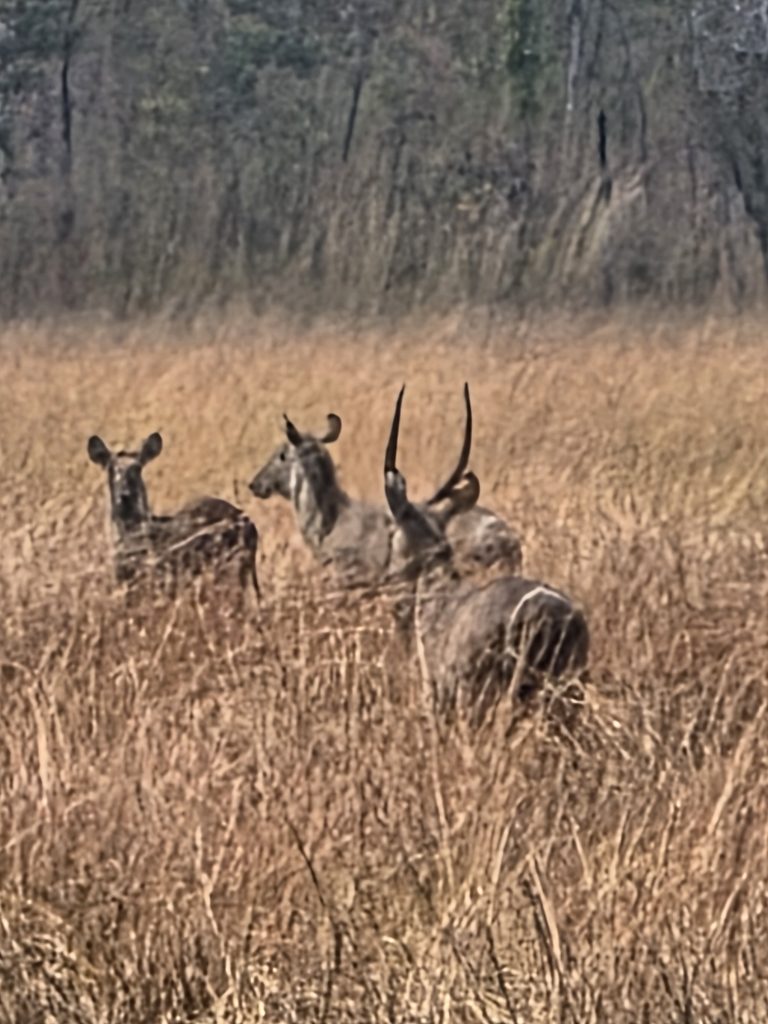
In summary: Hunting over 650,000 ha was a challenge. Long drives, extensive tracking, breathtaking insights into Mozambique’s wild fauna and flora – we take home many impressive insights and experiences! Definitely one of the best hunting areas in the world for leopards, who were numerous at the baits! Lions are rather difficult due to the very large area, which is hard to cover. Abundant: Niassa waterbuck, warthog, Crawshay’s zebra, Lichtenstein’s hartebeest, Roosevelt sable, spotted Hyena, Cape Buffalo, Crocodile, Common Reedbuck and Leopard.
For his 60th birthday, Willi had only one wish from his family and friends: a financial contribution for his lifetime buffalo, which he planned to hunt with his family in South Africa as part of a family hunting safari.
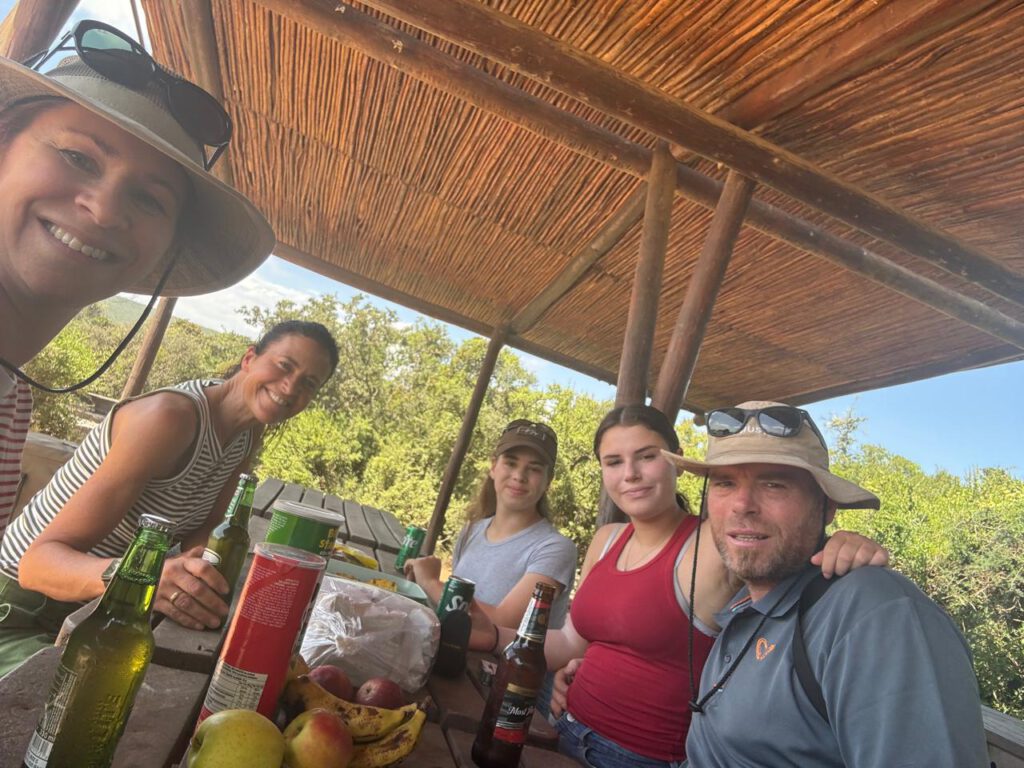
Said and done, the Schüller family set off for their hunting safari at Muller Hunting & Safaris base in the Eastern Cape of South Africa right after the Christmas holidays in December 2024, where they were planning on spending an exciting and eventful 10 days at NGIRI Wildgame Reserve.
It was supposed to be a buffalo stalk with the whole family – and that’s exactly what happened. A beautifull free roaming Dagga Boy (later measured at 43 inches) was shot after two days of stalking over hill and dale. Thanks to Willi’s good first shot placement, the kill shot wasn’t actually necessary – but it did bring immediate relief. Congratulations to this magnificent and exceptional trophy bull!
After this major goal was achieved, the other family members (all hunters, including the two daughters) also got their due, and Willi finally treated himself to a springbok.
We also visited the Addo Elephant Park together and paid a visit to our taxidermy in Somerset East. It was a pleasure having you with us, and we look forward to seeing you all again soon at NGIRI Wildgame Reserve!
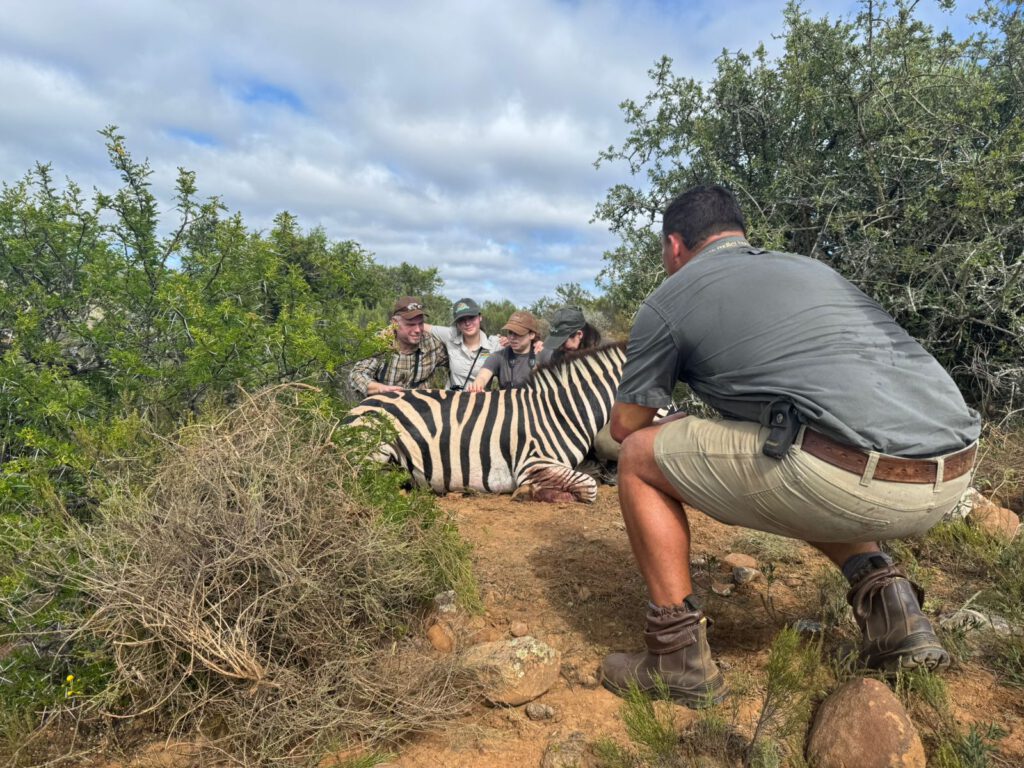
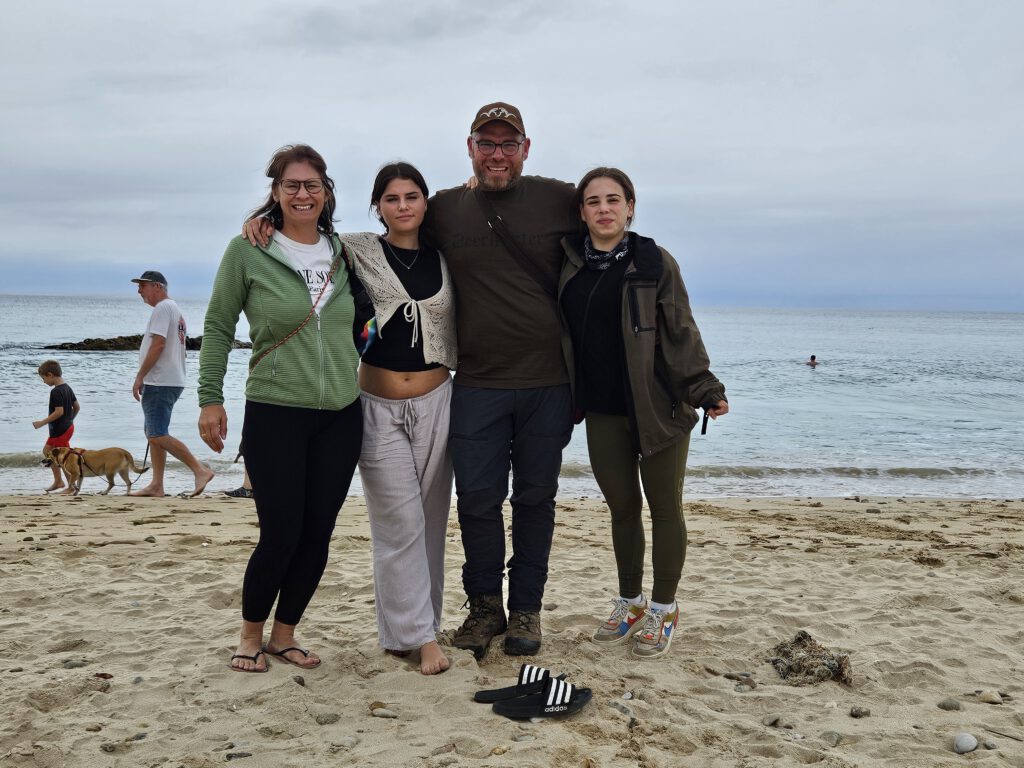
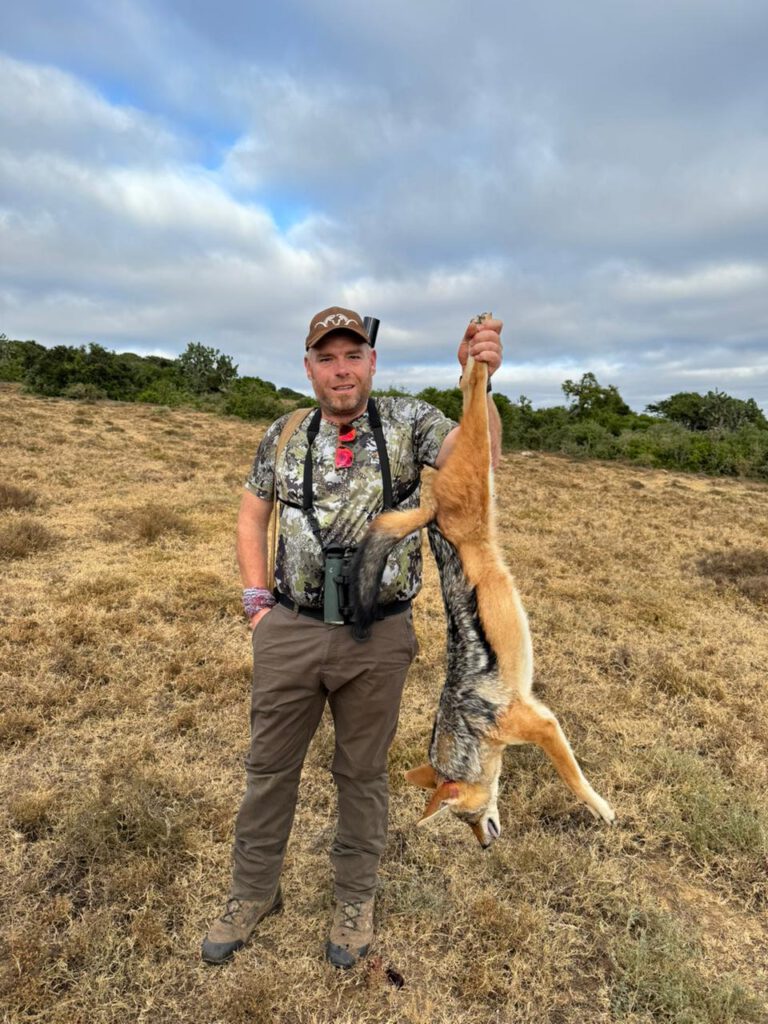
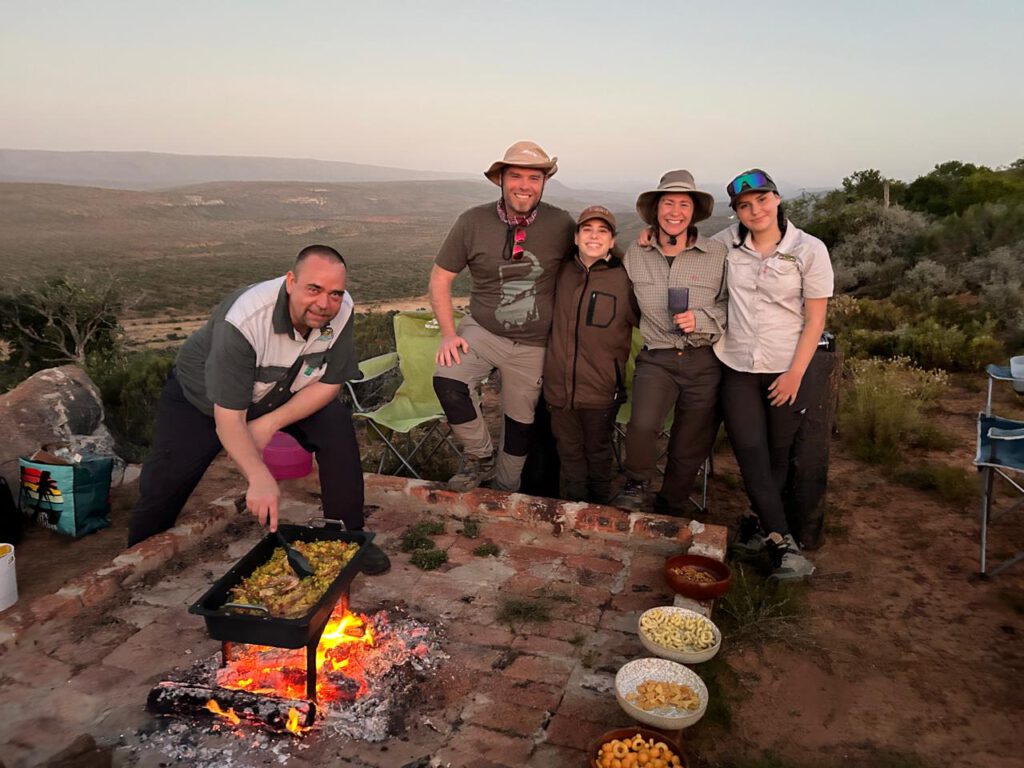
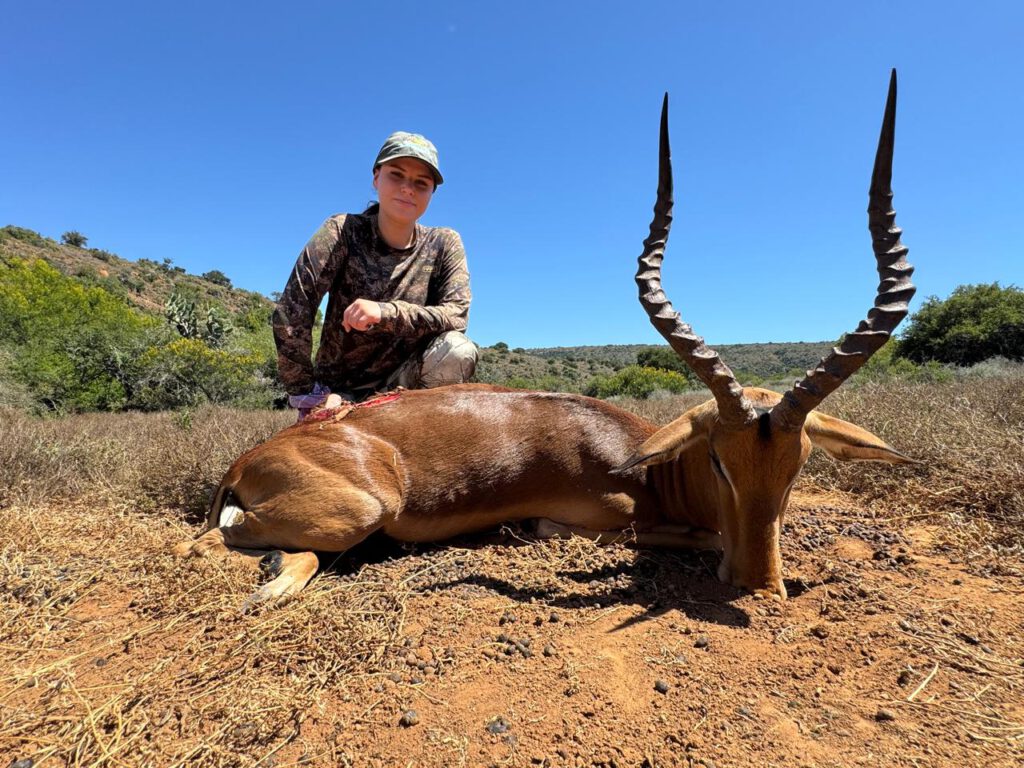
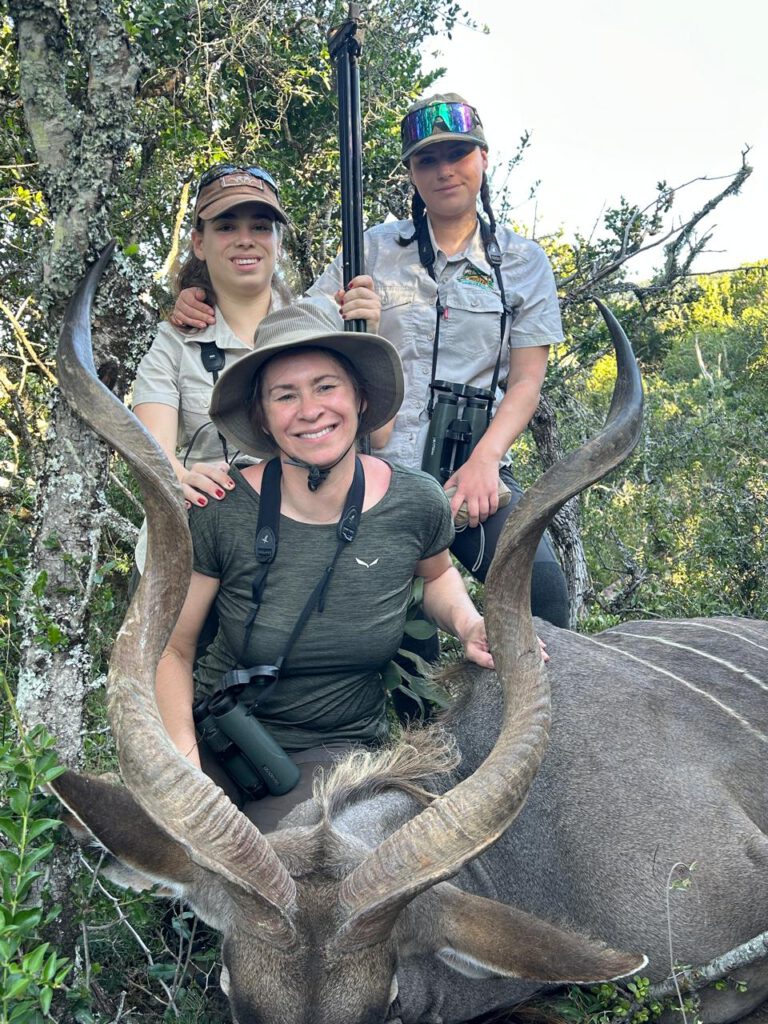
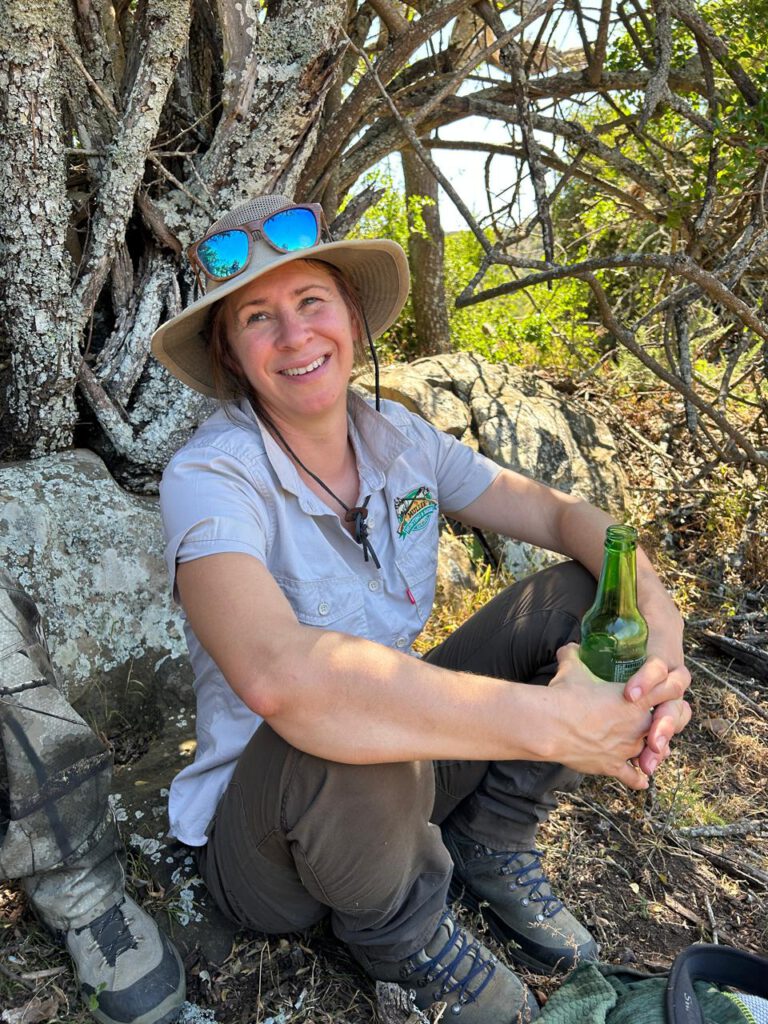
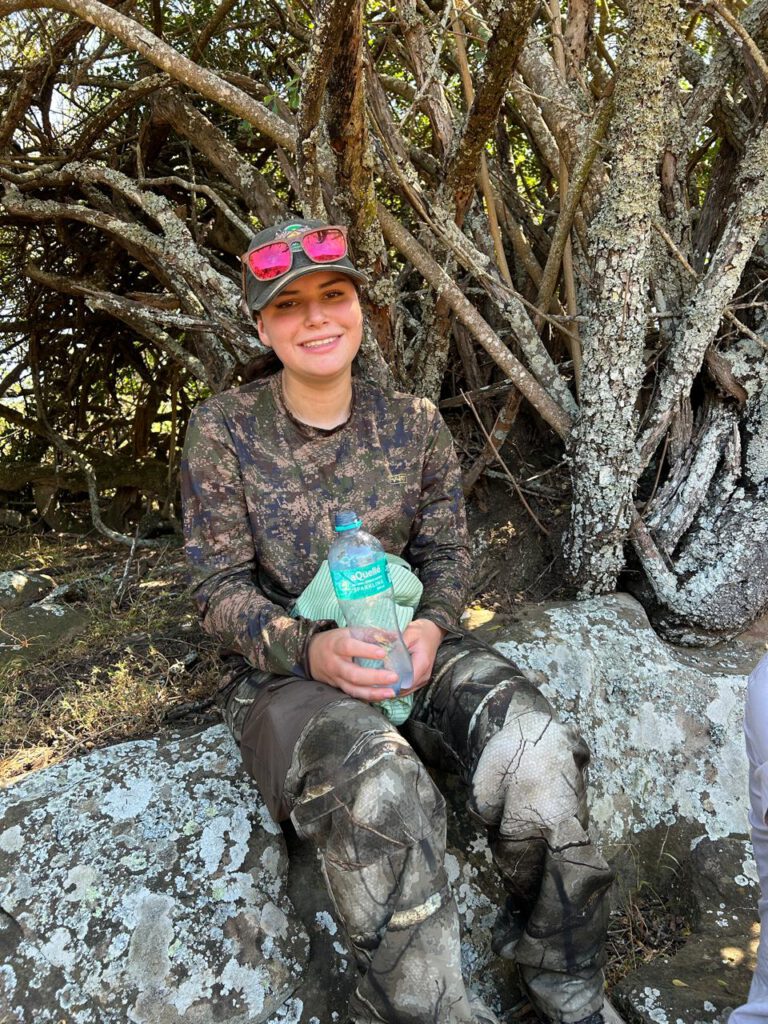
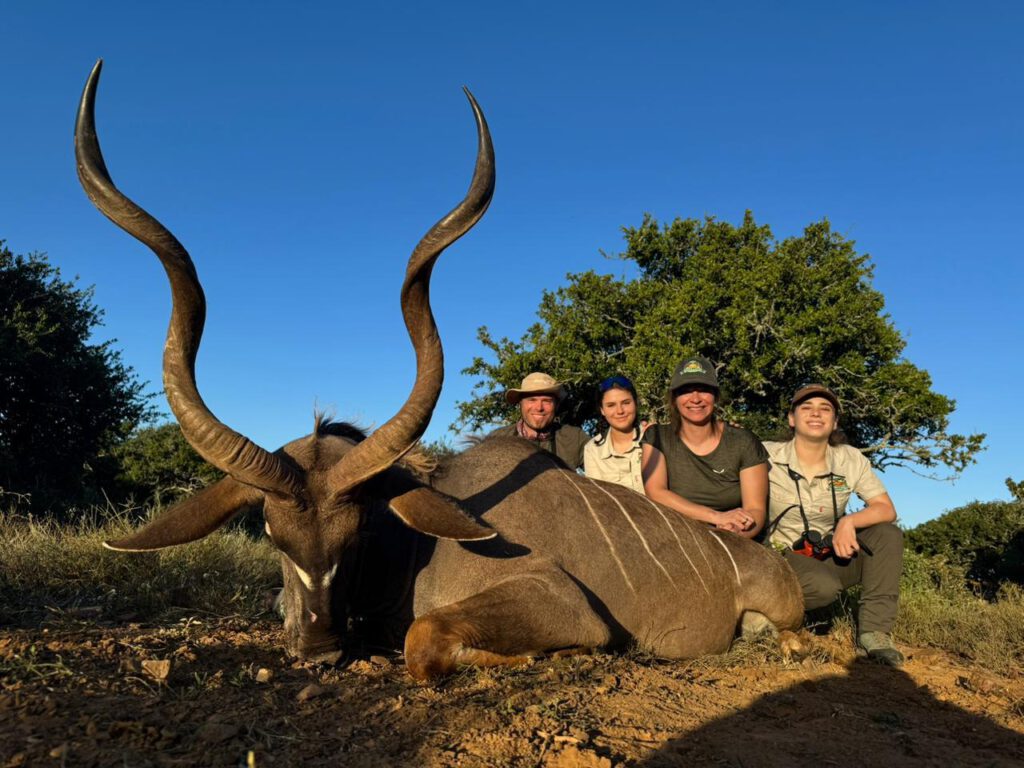
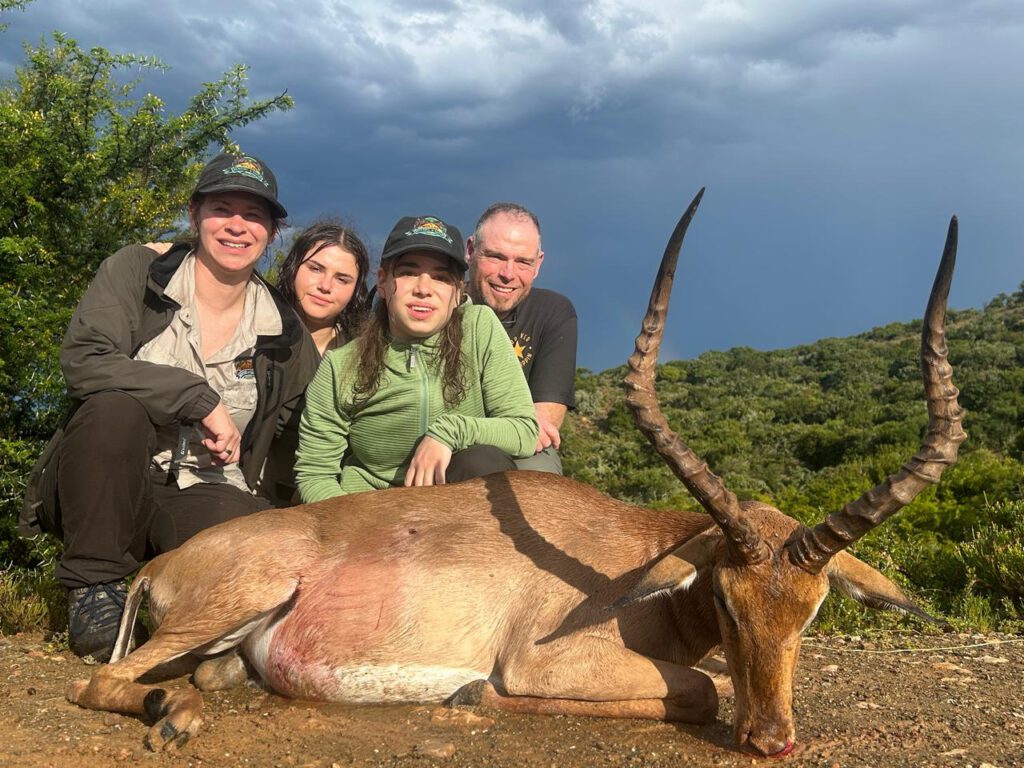
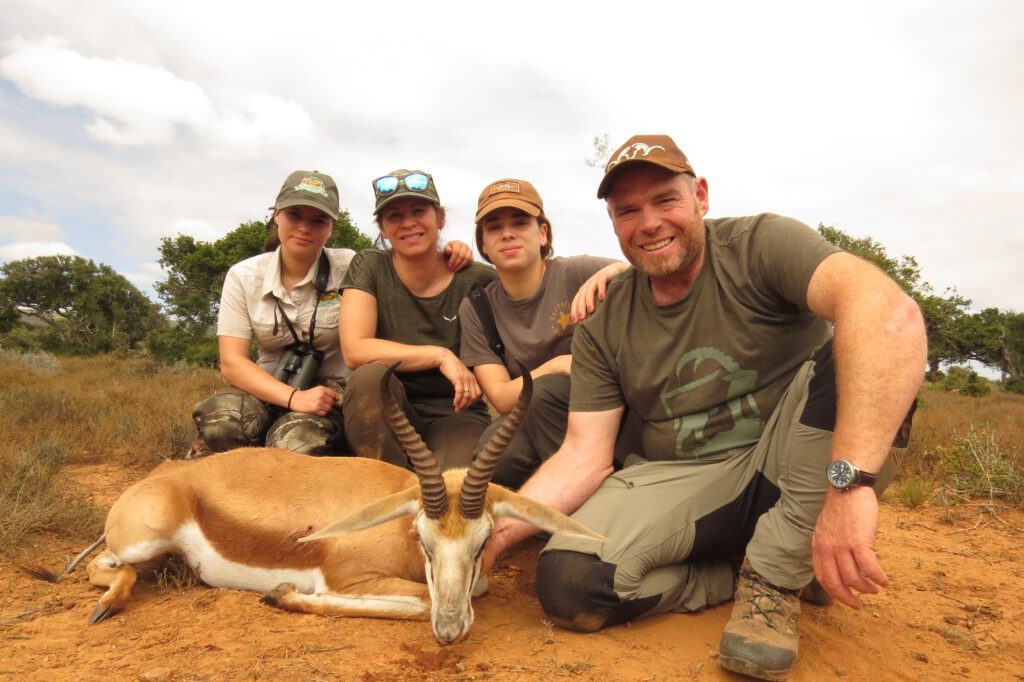
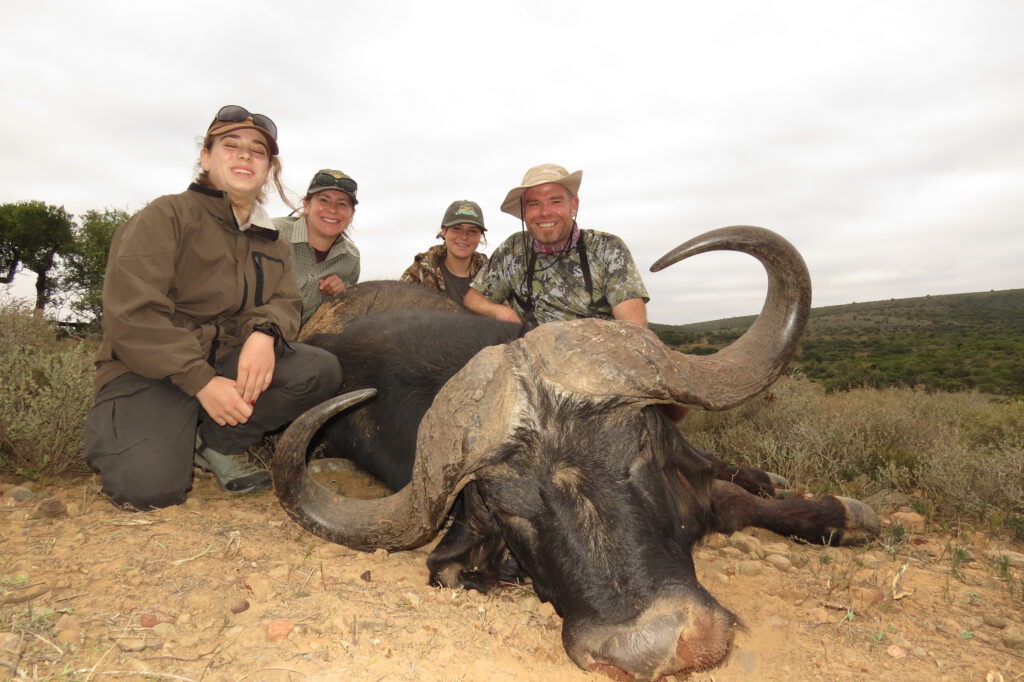
In South Africa, as in other countries, it is mandatory that a professional hunter must be present during trophy hunting. Of course, we also hunt on NGIRI for conservation or to provide our employees with meat – but we do not need our professional hunter training for that purpose. As land owner you are allowed to hunt only with a hunting licence on your own property.
Many people keep asking us what it actually needs to become a PH in South Africa? Basically, anyone who has the necessary knowledge and skills could register for a course and take the exam. However, you can only get a license as a professional hunter if you either have the South African citizenship or a permanent residency permit together with a work permit. The training itself is comparable to that of a professional hunter in Germany, but requires practical experience in the areas of tracking, wildlife science, fauna, game processing and weapon handling.
Training is provided in the following fields: hunting guidance, legal knowledge/hunting law, first aid in the bush, bore sighting, tracking, skinning and guest care. The last point in particular is crucial, because the guest is in our hands and we have two tasks to fulfill: to give them an unforgettable time and, above all, to ensure their safety. Another very important point is weapon handling. Since hunting is usually done while stalking, it is the job of the professional hunter to prepare the hunting guest for this type of hunting, including by zeroing in with the shooting stick, and to point out the importance of precise shot placement. When dangerous game takes the shot, the hits must be accurate. To be prepared for that, in one part of the PH shooting exams, a 15×15 centimeter moving target must be shot and hit three times within 30 seconds from the following distances: 30, 20 and 10 meters. Other parts of the exam are about precise sheet placement at 100 m, 200 m and 300 m. The candidate must adjust the optics themselves so that the grouping of the exam result is accurate – at all 3 distances.
A lot of it revolves around game, of course. The approach and behavior of the game are taught, as well as it´s anatomy – in order to clearly identify if you have a trophy animal in front of you. This can be difficult, especially when it comes to addressing age or gender. With springbok, for example, the females also have horns, which makes it difficult to distinguish them in large herds. But these are all things that you have to master in order to do justice to the game on the one hand, but also to do a good job in guiding your hunting clients to a successfull trophy hunt. And hunting at NGIRI Wildlife Reserve rests on these two pillars.
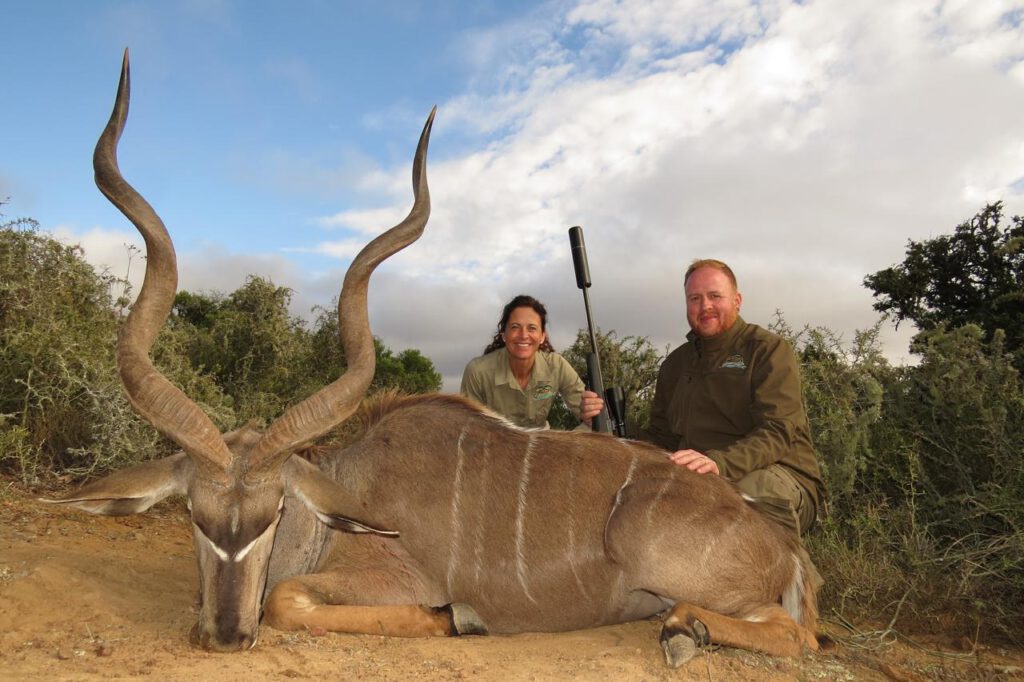
For me, this meant that although I had official permission to lead hunts after passing the Professional Hunter exam, my real learning time only began after that. I kept going out, out and out again to learn in the bush and from the native trackers & skinners. You also have to learn how to set up a hide, how to stalk effectively, how to read tracks and much more and, above all, how to master it. What many people don’t know is that shot is also on the curriculum, as is shooting with a rear sight and front sight, because if you can’t use the scope, you have to be able to do it. At the end of the training there is a test that is quite challenging. You have to complete a variety of tasks within a strict time limit, such as leading a guest to a strong kudu bull within shooting distance, confirming certain game, recognizing tracks, skilfully knocking the killed game out of the cover and salting it thoroughly, and much more. But you are all the prouder when you are one of the professional hunters in South Africa. For me as a German and also a hunter, it was a very special experience that I would not want to miss. Since then, I can say with a clear conscience from my own experience: If you have a South African professional hunter at your side, you can feel that you are in good hands.
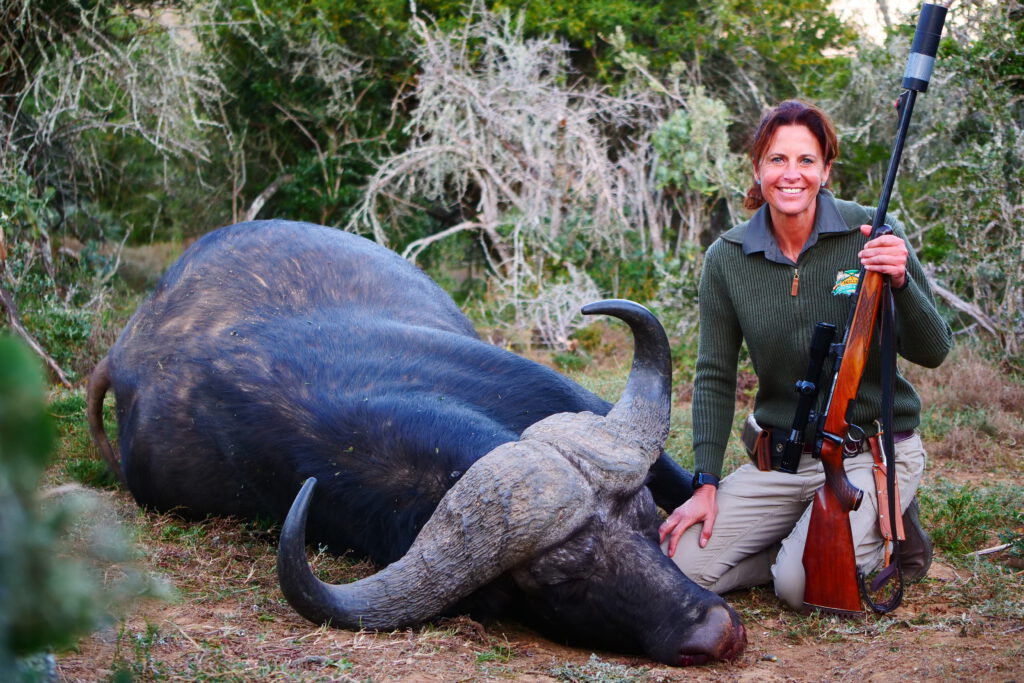
Following the recommendation of hunting friends, we contacted Anja to learn more about her private hunting in South Africa. Anja invited us to visit her booth at the Jagd & Hund trade fair in 2023, and we liked her idea of sustainable, ethical hunting in South Africa so much that we decided to go for it and booked a family safari on NGIRI for September 2024.
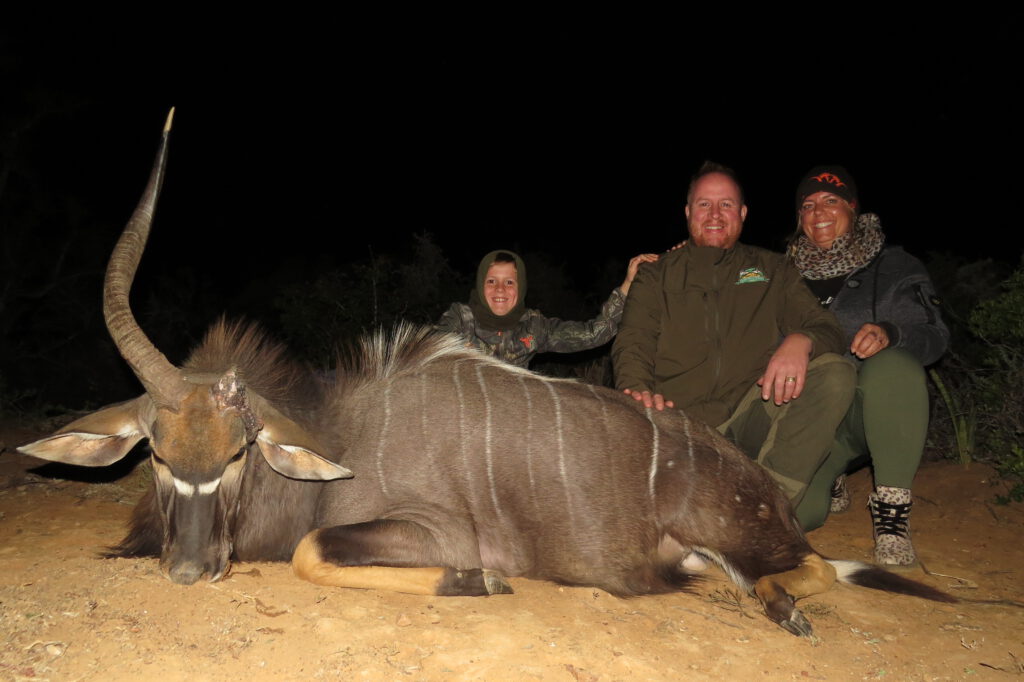
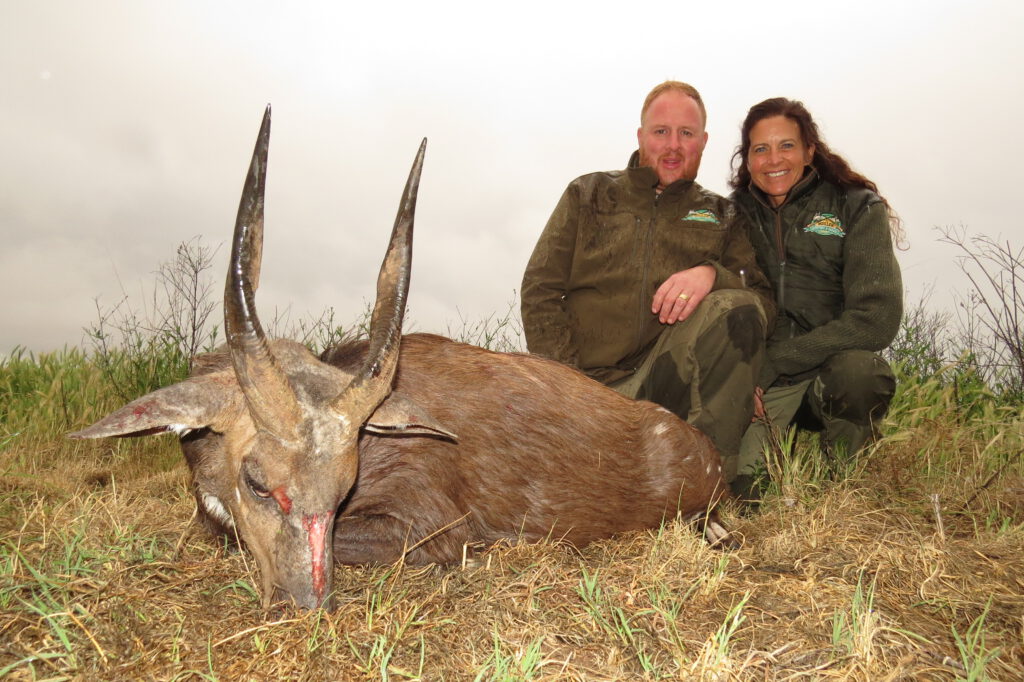
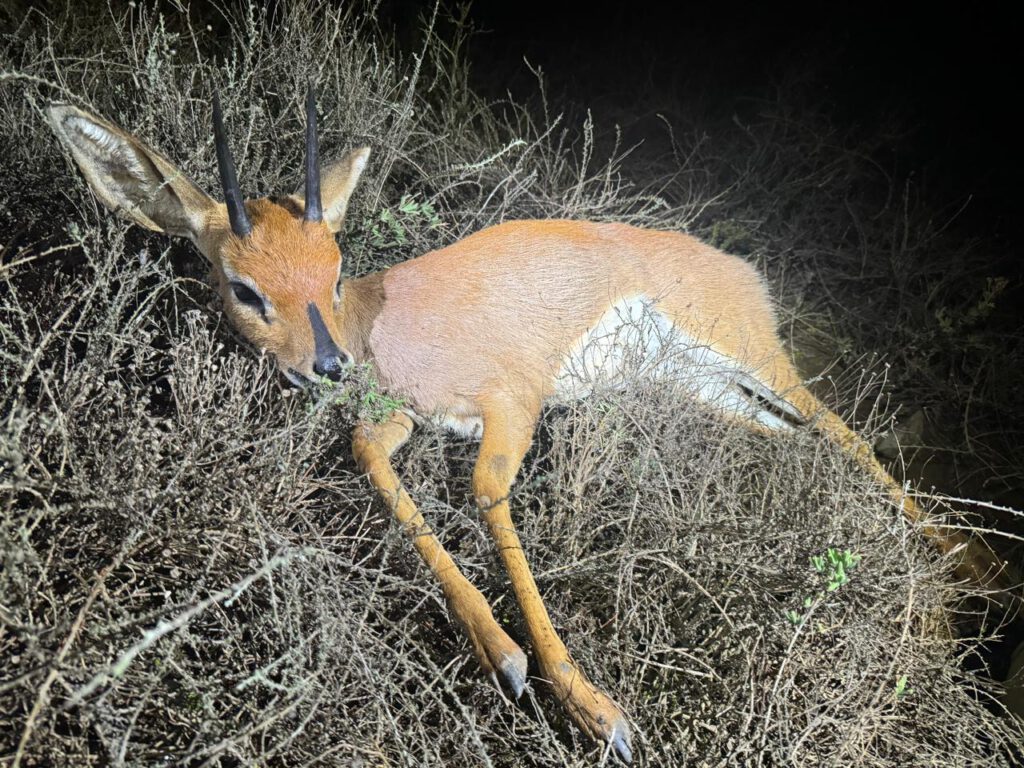
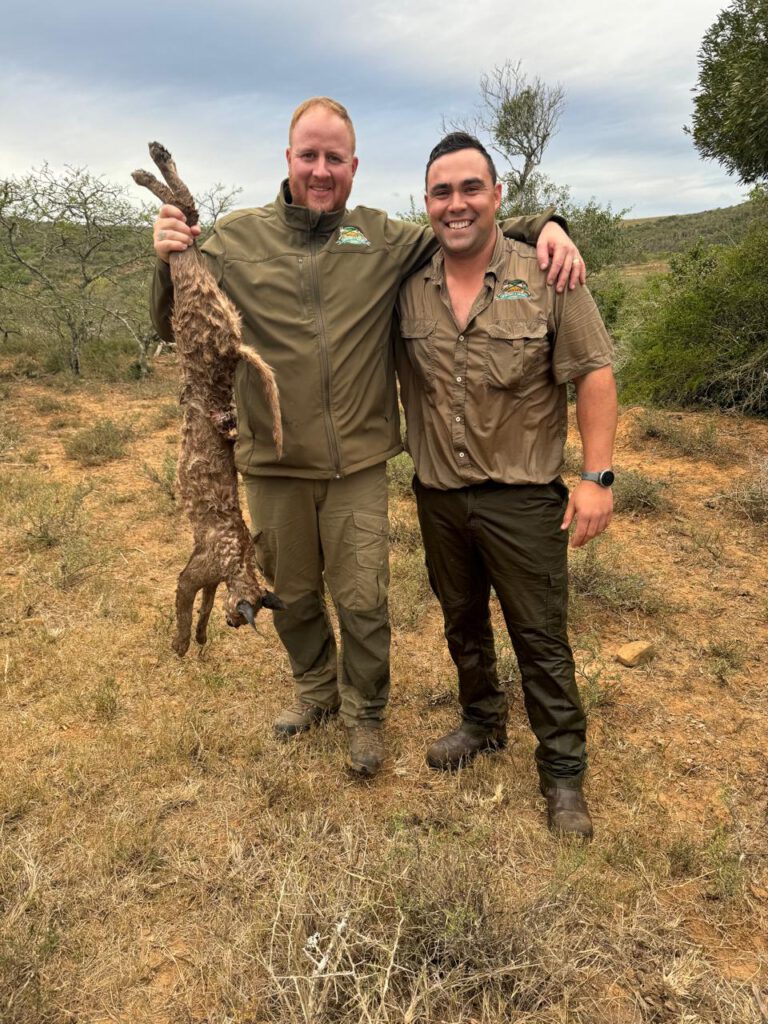
We were not disappointed – our week on NGIRI was an adventure just the way we wanted it. An enormous game population with exceptional diversity met excellent cuisine and wonderful hospitality. The hunting success was also impressive, and we ended up with a massive lynx (hunted with a pack of dogs), an abnormal nyala bull, a bushbuck, and a steenbok. The trip concluded with a deep-sea fishing trip in Port Elizabeth before we unfortunately had to head home.
Thanks to Anja and her team for a fantastic time and wonderful hospitality; we felt completely at home!
Thorsten, Denis, and Franz Klar (Germany), September 2024